“Feel Lighter. Look Better. Live Stronger.”
“Feel Lighter. Look Better. Live Stronger.”
Losing weight can feel exhausting before you even begin. One week you’re told to cut carbs, the next week someone says you should avoid fat completely. Social media promises fast results, miracle drinks, and “secret” workouts that supposedly melt fat overnight. Yet many people still feel stuck, frustrated, and disappointed when the scale barely changes.
If you’ve ever started a diet on Monday and quit by Friday, you’re not failing. The real problem is that most weight loss advice focuses on quick results instead of long-term health.
The truth is much simpler than the fitness industry wants you to believe.
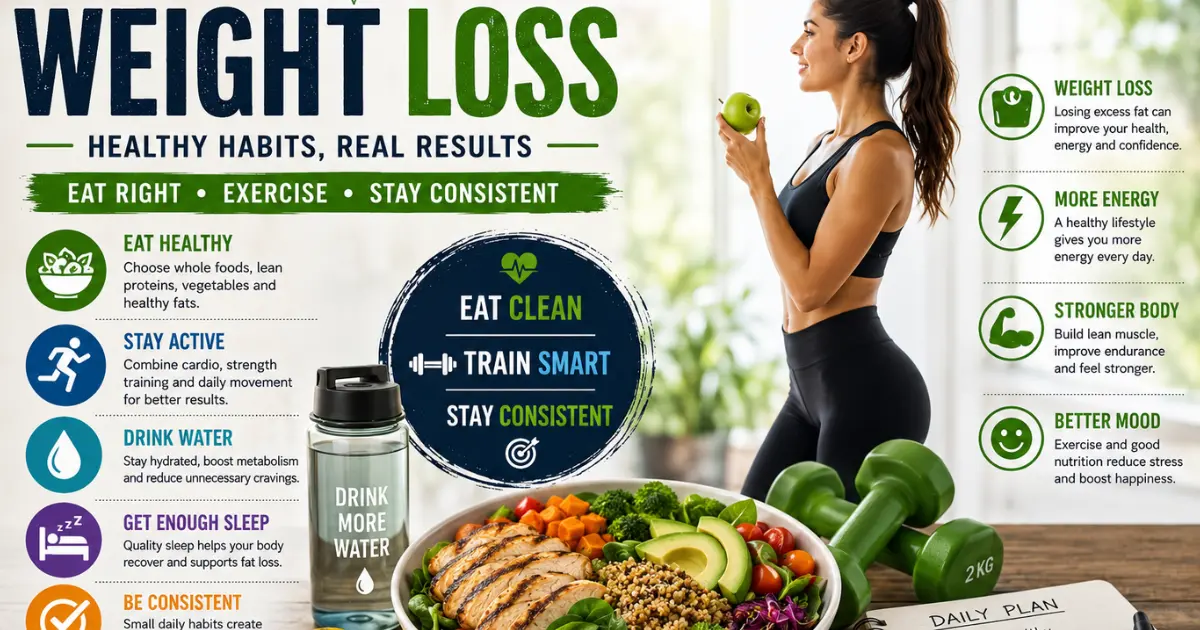
Weight loss happens when you combine healthy eating, regular movement, proper recovery, and consistency over time. There is no magic shortcut. But when you understand how your body works, losing weight becomes far less confusing and much more achievable.
This guide will walk you through everything you need to know about healthy weight loss, including nutrition, workouts, meal ideas, common mistakes, and practical habits that actually work in real life.
Not all weight loss is the same. Your body weight can fluctuate because of:
That’s why sustainable fat loss matters more than rapid weight changes.
Healthy weight loss happens gradually. Most experts recommend losing about 1–2 pounds per week. This pace allows your body to adjust while helping you maintain muscle mass and energy levels.
Crash diets may produce quick results, but they often lead to:
When you focus on long-term habits instead of extreme restrictions, your results become easier to maintain.
At its core, weight loss depends on energy balance.
When your body burns more calories than it consumes, it begins using stored fat for energy.
Calories Burned>Calories Consumed\text{Calories Burned} > \text{Calories Consumed}Calories Burned>Calories Consumed
This is known as a calorie deficit.
Calories are units of energy your body uses to function. Even when resting, your body burns calories for:
This is called your Basal Metabolic Rate (BMR).
The more active you are, the more calories you burn throughout the day.
Several things influence how quickly or slowly you lose fat:
Metabolism naturally slows down as you get older.
Muscle burns more calories than fat, even at rest.
Poor sleep can increase hunger hormones and cravings.
High stress may encourage emotional eating and fat storage.
Daily movement has a major impact on calorie expenditure.
Understanding these factors helps you build realistic expectations instead of chasing impossible transformations.
Exercise plays a powerful role in healthy weight loss because it helps burn calories, improves metabolism, and strengthens your body.
The best workout is the one you can stay consistent with.
Cardio exercises increase your heart rate and help your body burn energy efficiently.
Popular cardio exercises include:
| Exercise | Average Calories Burned (30 Minutes) |
|---|---|
| Walking | 120–180 |
| Running | 300–450 |
| Cycling | 250–400 |
| Jump Rope | 350–500 |
| Swimming | 200–350 |
Walking is especially underrated for weight loss. A simple daily walk can improve fat burning, reduce stress, and support heart health without putting too much pressure on your joints.
Many people avoid lifting weights because they fear getting “too bulky.” In reality, strength training is one of the most effective tools for long-term fat loss.
Benefits include:
You don’t need a gym membership to start. Bodyweight workouts at home can still produce excellent results.
HIIT stands for High-Intensity Interval Training. These workouts alternate between short bursts of intense exercise and brief recovery periods.
Example:
Benefits of HIIT:
However, balance is important. Doing intense workouts every day can lead to burnout and injury.
You cannot out-exercise a poor diet.
Nutrition plays the biggest role in successful weight loss because food directly affects calorie intake, hunger levels, hormones, and energy.
Focus on foods that keep you full while providing nutrients your body needs.
Protein helps maintain muscle and reduces hunger.
Examples include:
Fiber slows digestion and keeps you satisfied longer.
Examples:
Healthy fats support hormones and brain function.
Good sources include:
| Ingredient | Quantity | Benefit |
|---|---|---|
| Oats | 1 cup | High fiber |
| Banana | 1 medium | Natural energy |
| Almond Milk | 1 cup | Low calorie |
| Chia Seeds | 1 tbsp | Healthy fats |
This breakfast provides long-lasting energy while helping control cravings.
| Ingredient | Quantity | Benefit |
|---|---|---|
| Grilled Chicken | 150g | Lean protein |
| Brown Rice | 1 cup | Complex carbs |
| Broccoli | 1 cup | Vitamins and fiber |
Balanced meals help stabilize blood sugar and reduce overeating later in the day.
| Ingredient | Quantity | Benefit |
|---|---|---|
| Salmon | 150g | Omega-3 fats |
| Sweet Potato | 1 medium | Fiber and nutrients |
| Spinach | 1 cup | Iron and antioxidants |
Eating balanced dinners can improve recovery and support better sleep.
No food is completely forbidden, but some foods make weight loss more difficult when consumed excessively.
These foods are often high in calories while providing little nutritional value.
One healthy meal will not transform your body overnight. Likewise, one unhealthy meal will not ruin your progress.
Consistency is what creates results.
Many people fail because they approach weight loss with an “all or nothing” mindset. They try to be perfect for a few days, then quit after making a mistake.
Real progress happens when you continue even after setbacks.
Small improvements repeated consistently create lasting change.
Avoiding these mistakes can save you months of frustration.
Skipping meals often leads to overeating later in the day and may increase cravings.
Excessive cardio without strength training may lead to muscle loss and fatigue.
Poor sleep affects hunger hormones and recovery.
Highly restrictive diets are difficult to maintain and often backfire.
Healthy weight loss takes time. Sustainable progress is always better than temporary results.
Weight loss is not only physical. Your mindset matters more than most people realize.
Stress, boredom, sadness, and anxiety can trigger overeating.
Instead of using food for comfort, try healthier coping methods:
Your worth is not defined by your body weight.
Healthy weight loss should help you feel stronger, healthier, and more confident — not ashamed or obsessed.
Celebrate small wins such as:
These victories matter just as much as the number on the scale.
Starting can feel overwhelming, but simple changes often work best.
You do not need perfection to succeed.
The healthiest approach combines balanced nutrition, exercise, quality sleep, and consistent habits.
Most people can safely lose 1–2 pounds per week.
Yes, but combining healthy eating with exercise usually produces better long-term results.
Protein-rich foods, fiber-rich vegetables, and healthy fats can support fat loss by improving fullness and metabolism.
Many people return to old habits after following restrictive diets. Sustainable habits are easier to maintain long-term.
Weight loss does not have to feel miserable or impossible. You do not need extreme diets, endless cardio, or unrealistic expectations to change your body and improve your health.
What matters most is consistency.
When you focus on balanced meals, regular movement, proper recovery, and realistic habits, your progress becomes sustainable. Some weeks will feel easier than others, and that’s completely normal.
The goal is not perfection.
The goal is becoming healthier, stronger, and more confident one step at a time.
Start small. Stay patient. Keep going.
Your future self will thank you for it.