Post Pregnancy Fitness: How to Rebuild Your Body and Feel Like Yourself Again
After pregnancy, everything changes—your body, your routine, even your energy levels. Many women feel pressure to “bounce back” quickly, but the truth is, real progress doesn’t come from rushing. It comes from understanding your body, respecting its recovery, and moving forward step by step.
Post pregnancy fitness isn’t about chasing a perfect body. It’s about reconnecting with yourself, regaining strength, and feeling comfortable in your own skin again.
Understanding Your Body After Pregnancy
Your body has just gone through months of transformation. Muscles stretched, posture changed, hormones shifted—and all of that takes time to stabilize again.
It’s normal if you don’t feel as strong as before. It’s normal if your belly hasn’t gone back yet. And it’s completely normal if your energy feels lower.
Instead of fighting these changes, the smart approach is to work with your body, not against it.
When Should You Start Exercising?
This is where many women make a mistake—they start too early.
If you had a natural birth, you might feel ready within a few weeks, but that doesn’t mean your body is fully recovered. If you had a C-section, your body needs even more time to heal internally.
The safest approach is simple: listen to your body and get medical approval first. Starting slow is always better than stopping because of injury or fatigue.
The Right Way to Start: Build Your Foundation First
Jumping into intense workouts won’t help—in fact, it can delay your recovery.
What actually works is starting with the basics:
Gentle breathing exercises
Light pelvic floor activation
Simple movements to wake up your muscles
These may feel “too easy,” but they are essential. They rebuild your core from the inside out.
Moving Forward: Adding Activity Gradually
Once your body starts responding, you can slowly increase your activity.
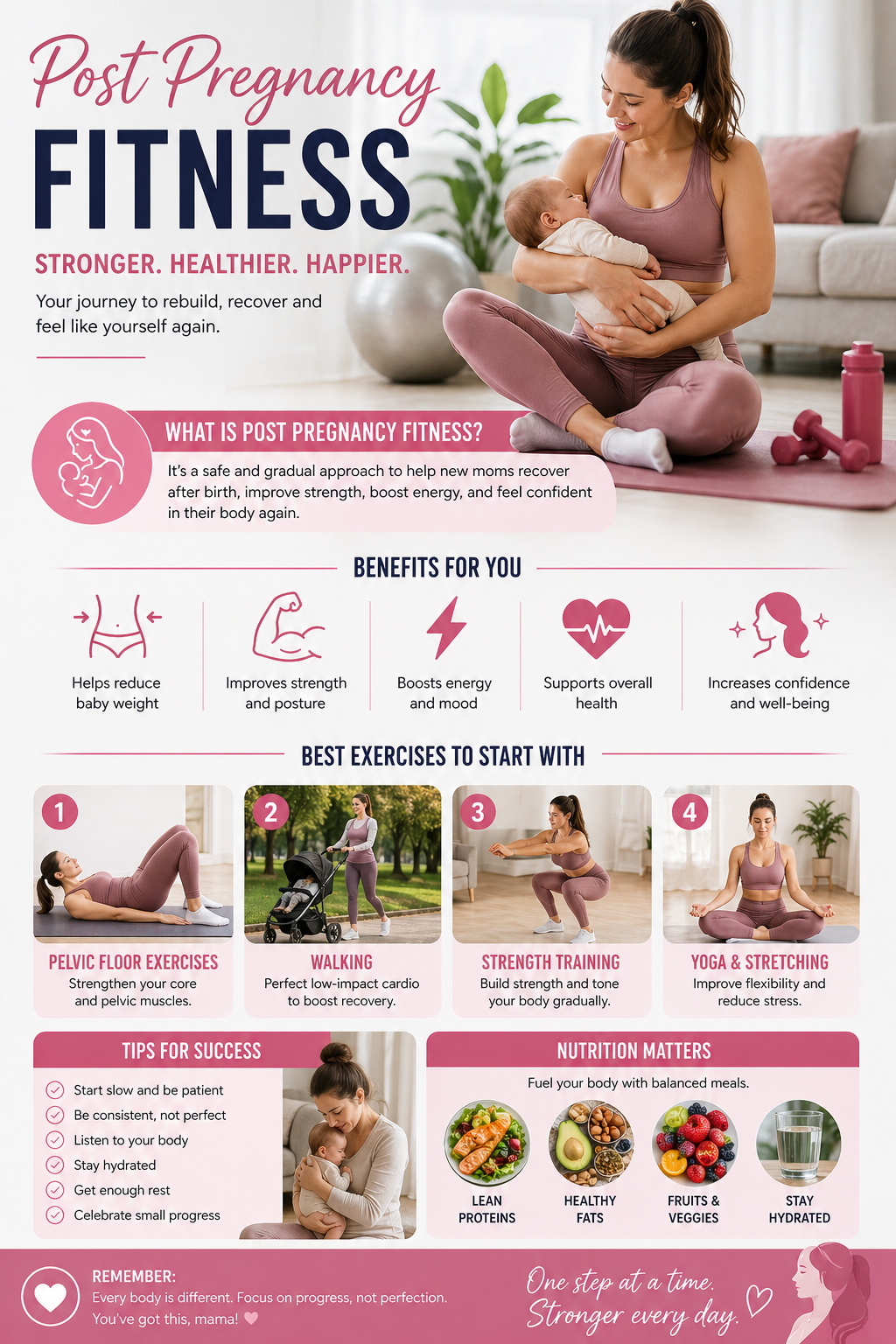
Walking is one of the most underrated tools. It’s simple, safe, and incredibly effective. A daily walk can improve your mood, boost your metabolism, and help your body recover naturally.
After that, you can introduce light workouts at home. Not long sessions—just consistent ones. Even 15–20 minutes a day can make a real difference over time.
Strength Comes Next (But With Patience)
A lot of women focus only on losing weight, but strength is what truly changes your body.
When you start adding light strength exercises, your body begins to tone, your posture improves, and your energy increases.
You don’t need a gym. You don’t need heavy equipment. You just need consistency and the right progression.
Nutrition: The Missing Piece Most People Ignore
No matter how much you exercise, if your nutrition is not balanced, progress will be slow.
After pregnancy, your body doesn’t need extreme diets. It needs nourishment.
Eating balanced meals, staying hydrated, and giving your body enough nutrients—especially if you’re breastfeeding—will support your recovery far more than any strict diet ever could
The Emotional Side of the Journey
This part is often ignored, but it’s just as important.
Some days you’ll feel motivated. Other days you won’t. That’s normal.
Comparing yourself to others—especially on social media—can slow you down mentally. Every woman’s recovery is different.
The goal is not perfection. The goal is progress.
Common Mistakes That Slow You Down
Many women unknowingly make things harder for themselves:
Starting intense workouts too early
Following unrealistic diet plans
Expecting fast results
Ignoring rest and sleep
Progress after pregnancy is not linear. There will be ups and downs—and that’s part of the process.
What Actually Works (Simple Truth)
What makes the biggest difference isn’t a “perfect program.”
It’s doing simple things consistently:
Moving your body regularly
Eating better (not less)
Giving yourself time
Staying patient
That’s it.
Final Thoughts
Post pregnancy fitness is not about going back to who you were before—it’s about becoming stronger in a new way.
Your body has already done something incredible. Now it just needs the right care, the right pace, and a little patience.
Give yourself that time.
You’ll get there.